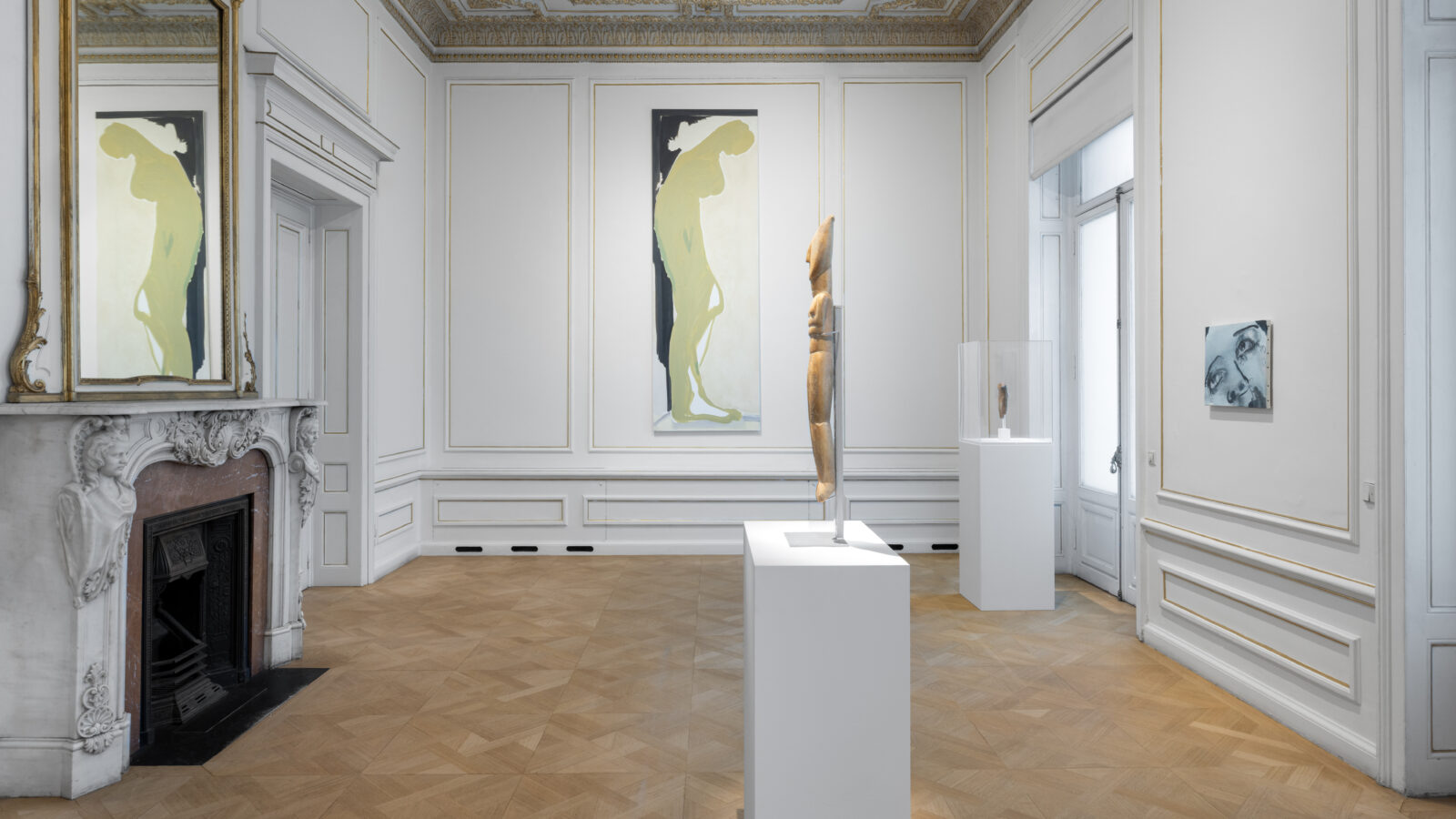
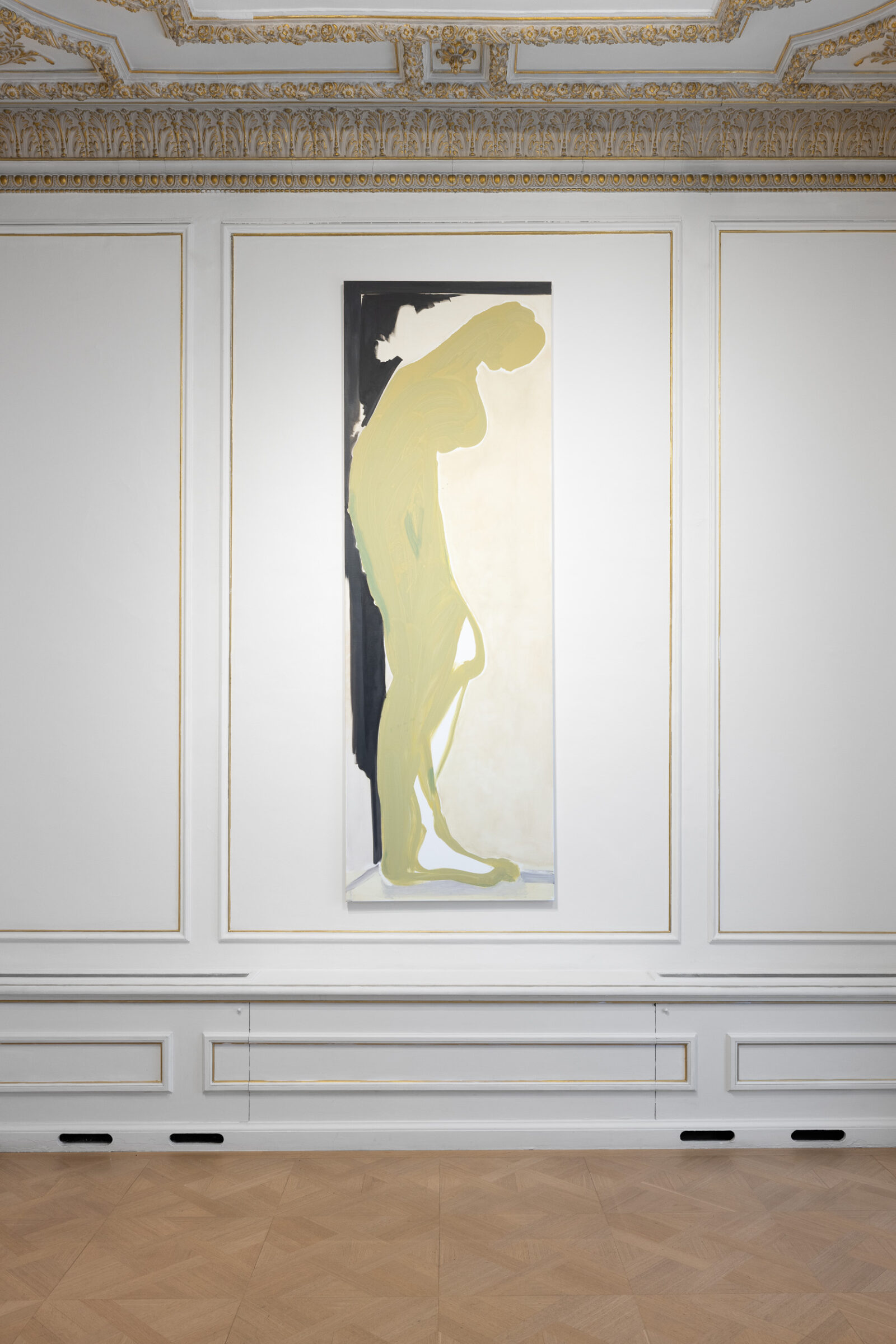
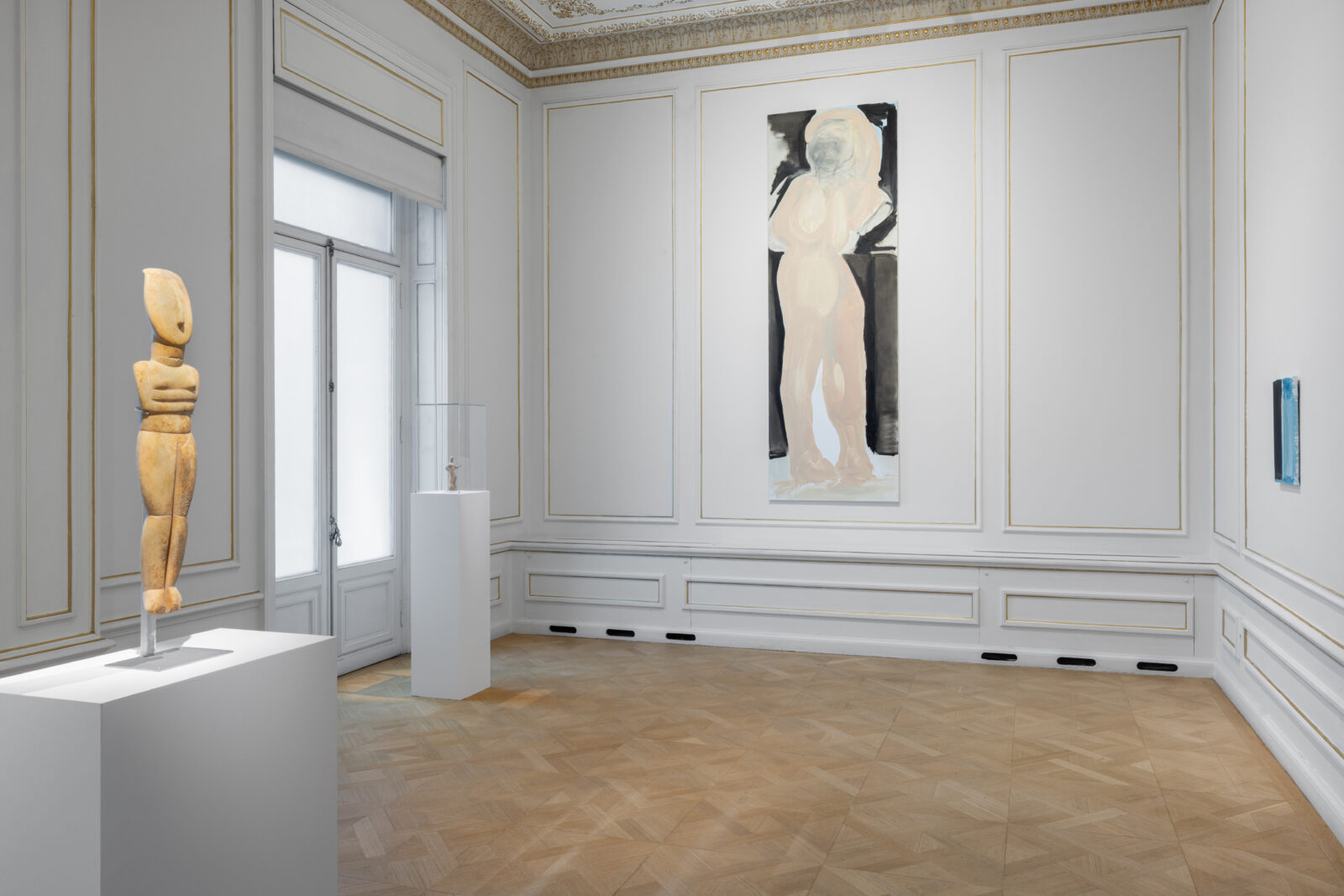
A painting featuring a large green figure stands in profile, slightly hunched and rounded at the back, enveloped by a patchy black and off-white color background.
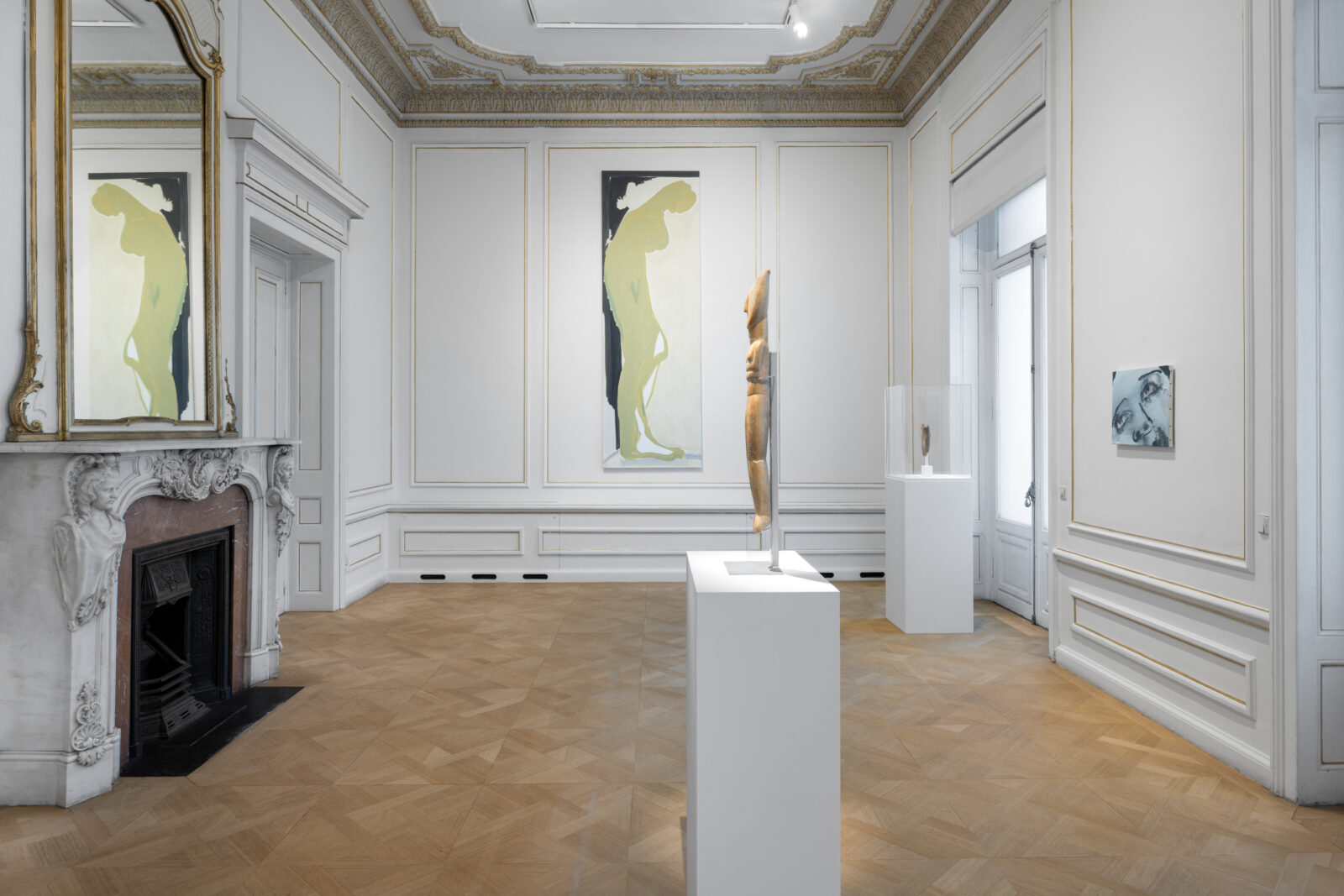
In front of the painted figure, in a separate work, is a marble geometric figurine. Smooth, naked, arms folded, a seemingly female-presenting body based on indications of breasts and an incised pubic triangle. If you look from afar, the works are in direct conversation with one another, through a deliberate curatorial conversation that physically places aesthetically or visually similar works next to one another. Indeed, even another figurine (a torso and thighs of a female figurine) is adjacent to the painted green figure. Approach them from a different direction in the space or individually, and the figures seem estranged and aloof, no longer in visual conversation with one another.
These objects are part of the exhibition for the artist Marlene Dumas (b. 1953, South Africa), her first solo exhibition in Greece, titled “Cycladic Blues.” The green figure, Phantom Age (2025), was created and displayed by the artist for the first time in Athens and is positioned next to two Cycladic figurines (Female statue, 2700-2400/2300 BCE and Torso and thighs of a female figurine, 4500-3200 BCE). This juxtaposition creates a comparison between old and new, modern and ancient, is the very crux threaded throughout the exhibition, primarily drawn through visual similitude rather than explicitly spelled out comparisons among the objects.
Despite the thousands of years separating Dumas’ works from the ancient objects, some themes resonate across space and time, especially those themes rooted in the human body, which pervade Dumas’ works and the ancient objects in the exhibition by nature of the very subject matter. Fragmented bodies, old bodies, young bodies, dying bodies, and newly-birthed bodies: it is bodies that unite us as people and challenge us as viewers through our shared fleshiness and shared humanity—ancient and modern.
The Cycladic figurines, like those next to Phantom Age, are early Bronze Age/prehistoric marble figures (primarily of women, though there are also male-presenting figurines and even those of ambiguous genders) from the Cycladic islands in Greece. These figures represent a mainstay in the museum’s collection. However, the collection is also much broader, encompassing works from the Classical and Hellenistic periods of ancient Greece, which the exhibition also draws upon.
The exhibition, curated by the independent curator Douglas Fogle in collaboration with the artist, places over forty works of paintings and works on paper from three decades of Dumas’s career, in dialogue with some 14 ancient works from the Cycladic Museum of Art’s collection, These ancient objects were selected by Dumas herself: from figurines to vessels with testicles to fragments. Dumas, who was born in South Africa, has spent five decades living and working in Amsterdam.
Dumas divides her works into four categories: The Family Portrait (in which her daughter and grandchild are featured, such as Helena and Eden, 2020); the Erotic Figure (sourced from porno books, pinup magazines, and polaroids of stripteasers, like Leather Boots, 2000); the Fragmented Body (such as her smaller drawings showing parts and fragments of bodies, like Long Neck (fragment), 1998); and Portraits of Sculptures (paintings inspired by sculptures, like the eponymous Cycladic Blues, as well as many portraits of older women in the exhibition, including Old and Phantom Age (2025), created for this exhibition).1 Indeed, for Old and Phantom Age, Dumas draws on a second century BCE Roman copy of a Hellenistic sculpture, The Old Market Woman, whose hunched and sinewy profile is echoed in Dumas’ paintings, particularly Phantom Age.2
: :
There is a long artistic, philosophical and political tradition of comparing distant cultures and periods to the purported “timelessness” of the ancient Greeks. Democracy. Justice. Artistic innovation. Affinity for and appreciation of the human form. But we know things were more complicated, and these values are hollow when we consider those excluded from these traditions or how the classical past has been mobilized to support nefarious aims. Even Dumas mentions that when she grew up in the 1960s, she never liked “Classical Greek art,” because it was “contaminated and claimed by the wrong people.”3
With this criticality, Dumas’ exhibition makes this connection feel less contrived. Indeed, Dumas creates synergies that the curation illuminates between ancient Greek art/society and her works, some of which are directly inspired (such as the eponymous Cycladic Blues, 2020, for which the exhibition is named). For example, Dumas, who grew up as a white woman in Apartheid South Africa, noted how ancient Greek tragedies have been used to articulate forms of resistance, such as when Nelson Mandela played Creon in Sophocles’ Antigone, a tale of both tragedy and justice, while he was imprisoned on Robben Island from 1964-1982.4
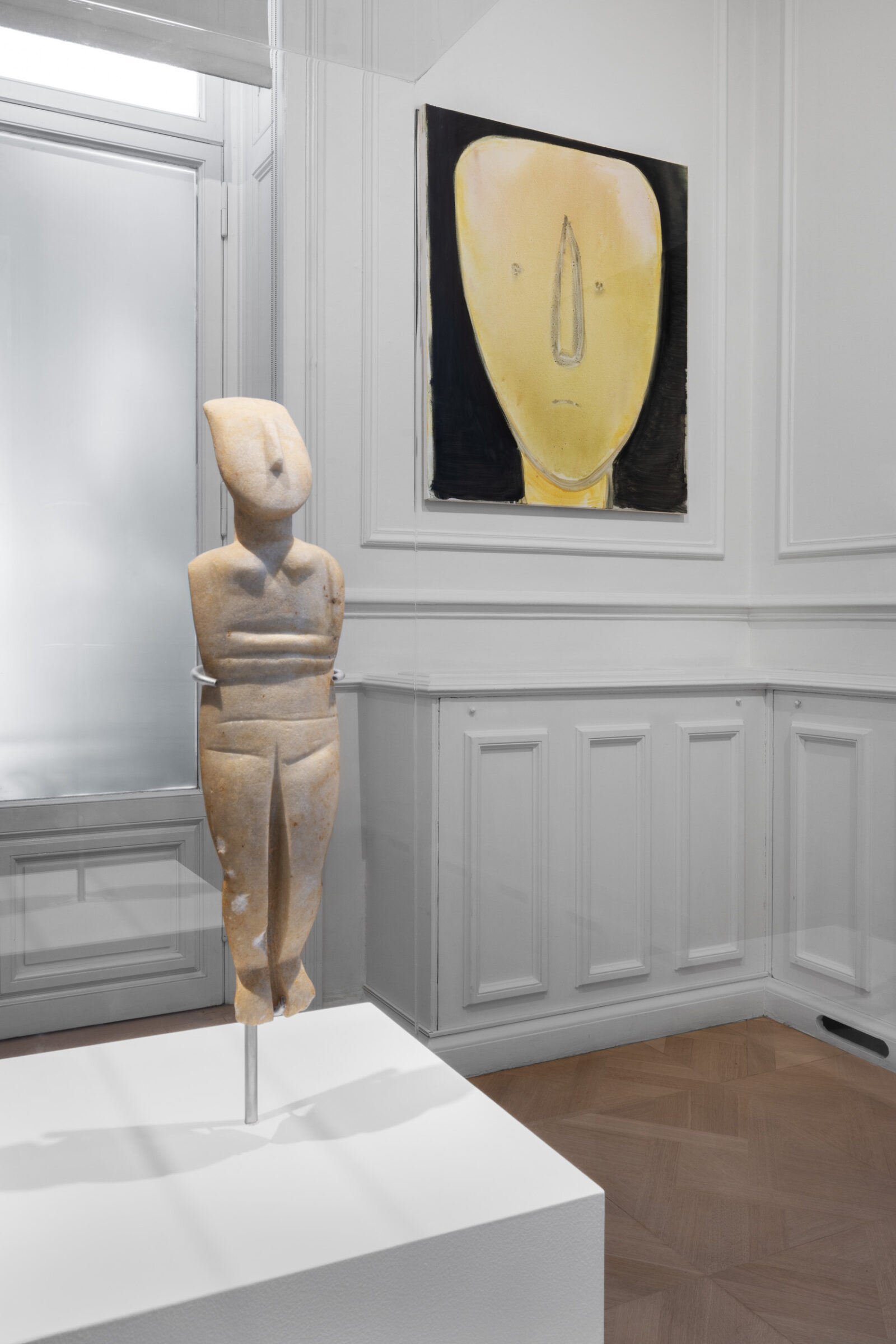
At many points, the visual resonances between Dumas’ work and the ancient works are quite obvious; for instance, Cycladic Blues, which depicts the weathered and yellowed marble face of a Cycladic figurine with a long nose and subtle marks indicating eyes and a mouth is positioned next to a female Cycladic figurine (2700-2400/2300 BCE). The formal similarities are also evident with another work, Immaculate (2003), a close-up of a female crotch, which is positioned directly next to a statue of the pubic area and legs of a female figurine (2700-2400/2300 BCE). There is no confusion or subtlety. Nor is there with Two Gods (2021), a portrait of two large phalli next to a Composite vessel (1900-1650 BCE) in a phallic-like form, the brazen and blunt sexuality something the ancients and us modern people both share. Once again, we are united by our shared fleshiness.
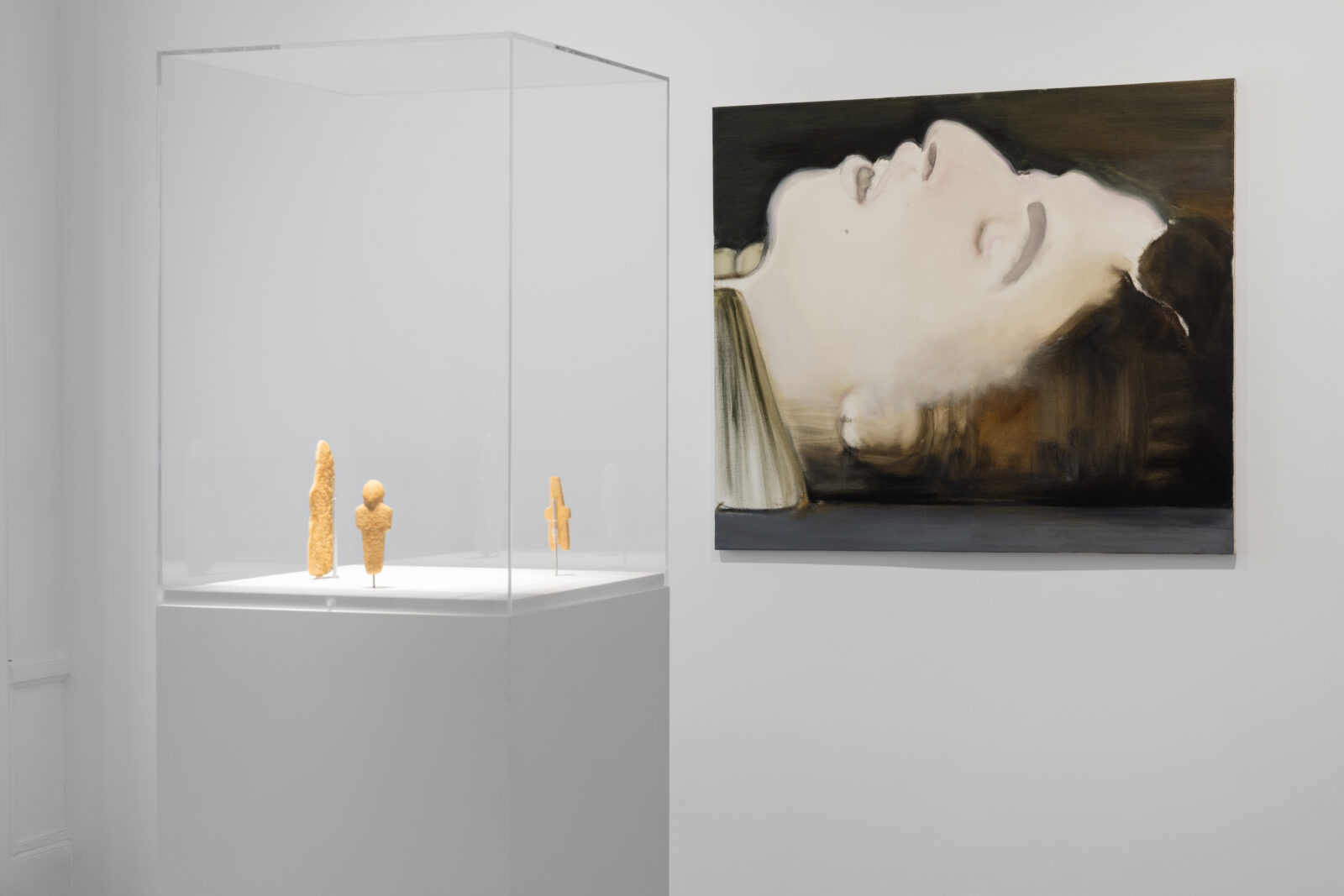
Departing from the rigid geometric forms is the work Old, displayed next to the “Mantle Dancer,” figurine (350-300 BCE), which shows just that: a small figurine of a dancer enveloped in sumptuous drapery. Old, also created for and displayed for the first time at this exhibition, can be seen as a counterpart to Phantom Age, also based on The Old Market Woman sculpture, but from a frontal perspective.
Some of the most intriguing juxtapositions are those that incorporate multiple ancient objects with Dumas’ work, some of which have less clear visual comparisons but invite a greater dialogue, a Socratic dialogue, with the surrounding works. Indeed, this idea of a “Socratic dialogue,” was even mentioned by Dumas in the exhibition’s accompanying catalog as a theme threaded throughout her works placed in conversation with ancient objects. She writes, “I believe that in any search for truth, the answer is not found in isolation. It is found in a critical discussion, in which the encounters with other viewers and other artworks are essential, without a predefined result.”5 Furthermore, in a 2006 interview, in relation to her teaching, she said, “I see teaching as a very important thing, and not only because I teach them things, but also because we have a dialogue, and you see what you really want. You find things out. I still believe in the Socratic dialogue. Art is really something that you learn from being around people.”Ella Gonzalez