
Monstrous Beauty: A Feminist Revision of Chinoiserie, exhibition
The Metropolitan Museum of Art, New York
March 25, 2025 — August 17, 2025
The circular show Monstrous Beauty: A Feminist Revision of Chinoiserie begins and ends with two ceramic vestiges that trace the shifting politics of porcelain. The first is a piece of sea sculpture (Figure 1)—a hybrid form of marine invertebrates, ship fragments, and a porcelain cup recovered from the wreck of the Witte Leeuw (White Lion), a three-masted trade ship owned by the Dutch East India Company that sank in the South Atlantic Ocean in 1613. The second soon-to-be vestige is Patty Chang’s Abyssal: Massage Table (2025) (Figure 2), a full-size porcelain table punctured by holes and glazed only on its underside. Chang’s piece invokes the unseen labor of Asian women spa workers and will be sunk in the Pacific Ocean after the exhibition closes to serve as a deposit for growing coral.
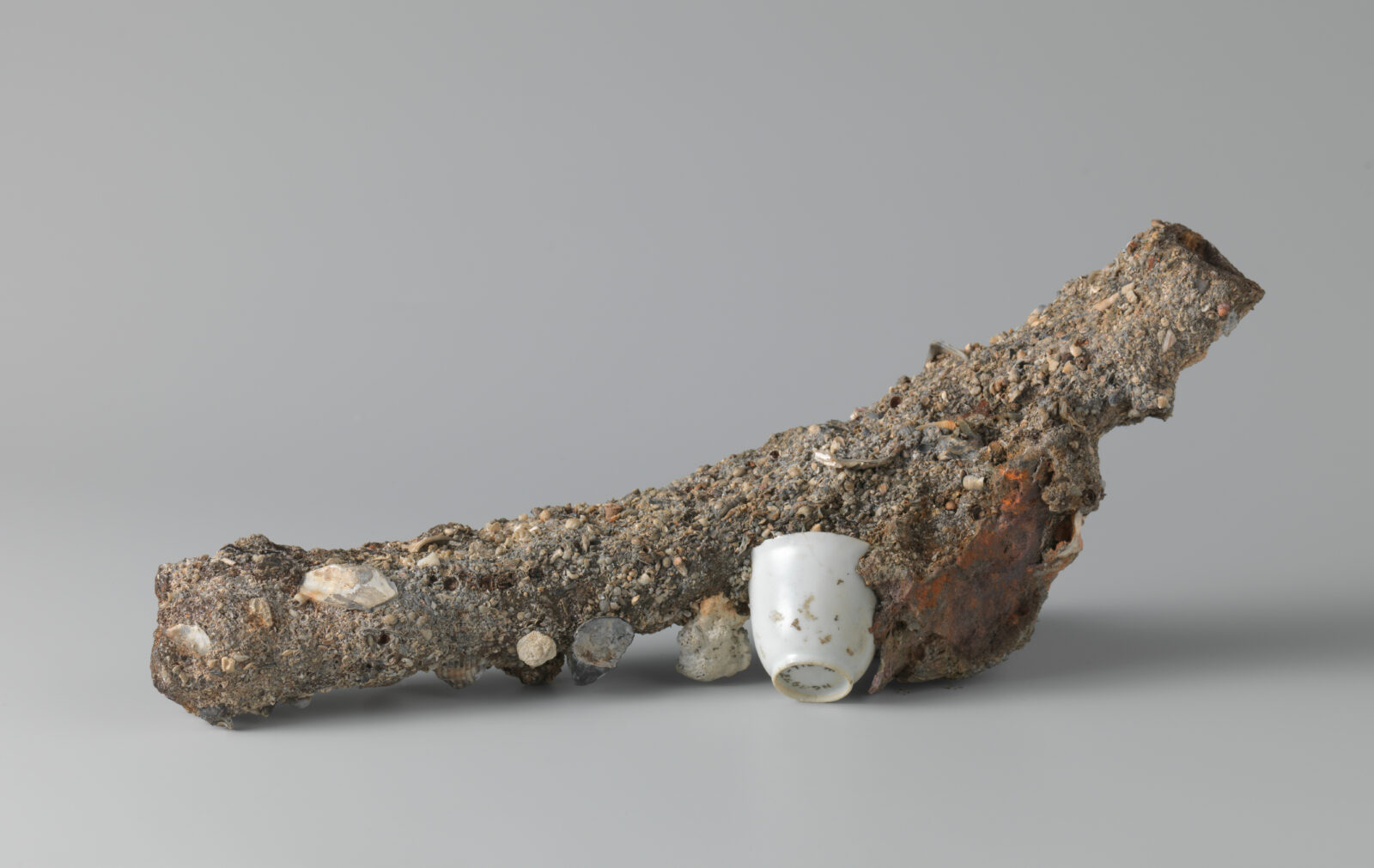
These two works, separated by four centuries, conjure histories of Asian migratory labor and care work that accompany and outlast porcelain’s global journeys. They also offer a reparative retelling in which porcelain objects—often interpreted as surrogate Asian bodies—take on ecological lives beyond the racialized aesthetics encoded in chinoiserie.
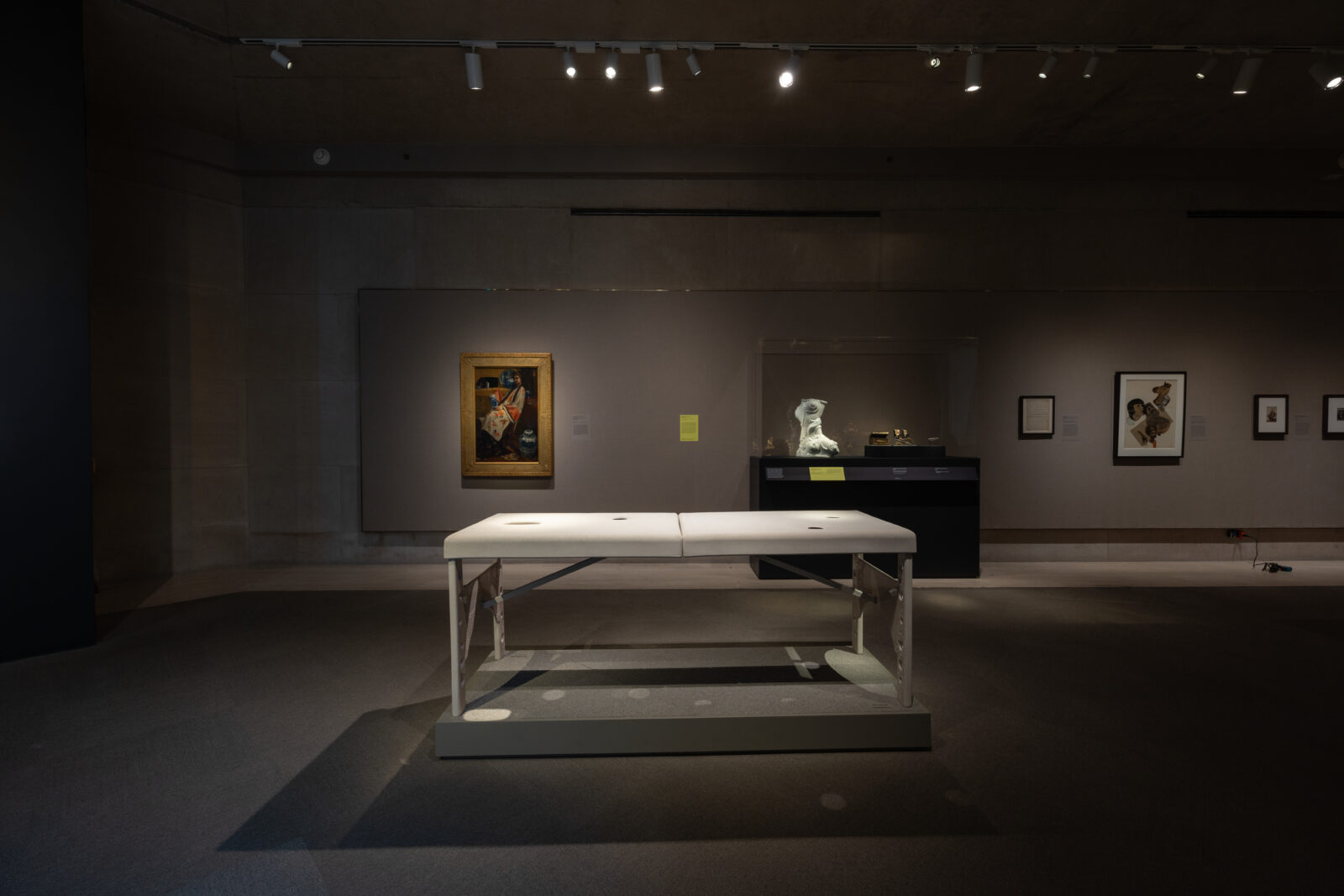
Monstrous Beauty: A Feminist Revision of Chinoiserie is a first-of-its-kind exhibition that brings together nearly 200 historical and contemporary works to reimagine European porcelain through a feminist lens. Chinoiserie emerged in the Age of Discovery as ships returned from Asia laden with porcelain, lacquer, and silk that ignited Europe’s obsession with imported beauty and the fantasy of Eastern femininity. By the eighteenth century, this “Chinese taste” fueled a culture of imitation, transforming domestic objects and palace interiors into imperial spectacles. Later popularized by Honoré de Balzac as shorthand for a delusional obsession with “wanton” Eastern luxuries, chinoiserie names not just a style but an ideology that naturalizes the racialized labor behind luxury goods and projects dehumanizing fantasies of the East onto the figure of the Asian woman.
Iris Moon, Associate Curator of European Sculpture and Decorative Arts at The Met, first connected chinoiserie to anti-Asian violence when she read Aileen Kwun’s essay “It’s Time to Rethink Chinoiserie” in the wake of the 2021 Atlanta spa shootings.2 Ornamentalism names a condition of coercion and discipline through racial and sexual objectification. It also gestures toward alternative ways of being for those—especially the “yellow woman”—who have come to know themselves through the decorative, reclaiming ornament as a site of feminist possibility.
The exhibition reimagines the archive of chinoiserie through five thematic constellations: “Shipwrecks and Sirens: Early Arrivals of Porcelain in Europe,” “Surrogate Bodies: Mary II and Porcelain Obsessions,” “Spilling Tea: Performing Domesticity,” “Artificial Mothers: Porcelain Figurines and Womanhood,” and “Afterlives of Chinoiserie.” Historical artifacts are interspersed with works by contemporary Asian and Asian American women artists, each marked by a neon-yellow sign that signals dialogue across time and material.
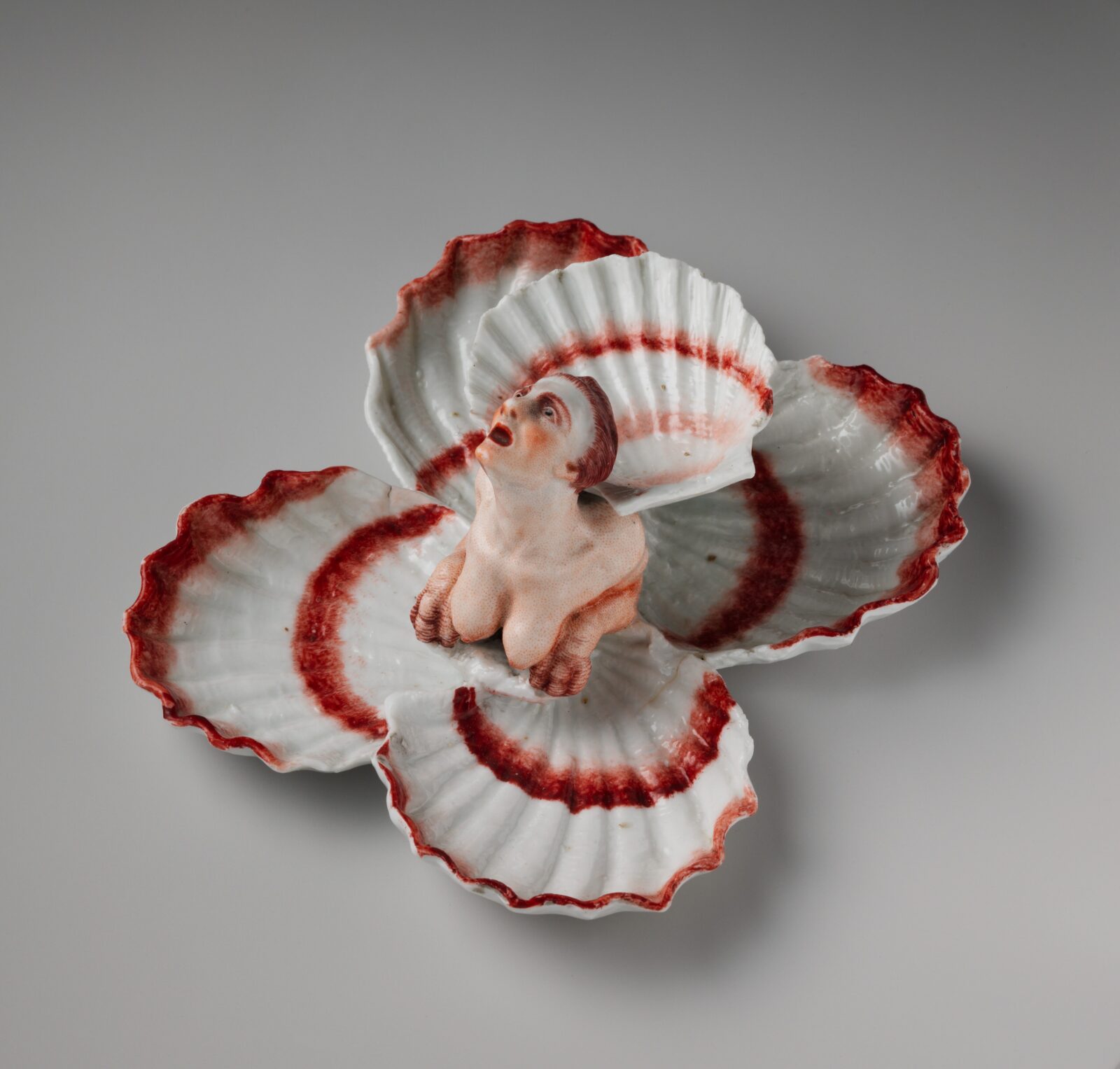
The juxtaposition of an eighteenth-century sweetmeat dish made by the Doccia porcelain manufactory (Figure 3) with Jen Liu’s video The Land at the Bottom of the Sea (2023) stages one such dialogue. Head pulled back and mouth agape, a siren with pendulous breasts adorns the dish. She claws five scallop shells that fan around her body and serve as vessels for sweet delicacies. Her violently wrenched body evokes porcelain’s etymological tie to the sexualized language of conquest: the word porcelain derives from the Italian porcellana, meaning “cowrie shell” but so named because the shell’s furrowed opening was thought to resemble a sow’s vulva.3 Circulating as currency in the transatlantic slave trade, cowrie shells link porcelain’s luminous surfaces to the hidden economies of extraction, bondage, and racialized labor that underwrote its global circulation.
Jen Liu’s live-action and 3D animation video is displayed beside the cabinet that holds the Doccia dish. Standing before the contorted body of the siren, viewers hear thrashing water and a monotone female voice alternating between English and Mandarin. The video follows porcelain sirens drifting through a dystopian water world. The work reflects on the failures of labor activism in South China by circulating various conditions of social and financial “liquidation”—the collapse of NGOs, the limits of techno-optimism, and art’s struggle to imagine alternative futures.6 A decade later, Monstrous Beauty offers more than a feminist and postcolonial corrective to the 2015 exhibition. It advances a practice of relational grievance—a mode that exposes the buried histories of Asian labor sustaining global beauty and fashion, that weaves feminist solidarities across the uneven geographies of racialized desire, and that mourns through intimacies transforming loss into enduring ground for connection.
At the same time, I wonder whether the curatorial practice ultimately tempers the exhibition’s revisionist promise. The only extensively constructed subjecthood in the exhibit belongs to Mary II, Queen of England, who reproduced her absolutist power through porcelain and lacquers that now orbit her portraits in the exhibition hall. What does it mean to uncritically fold white womanhood—a figure long complicit in imperial and enslaving power—into the feminist politics of chinoiserie? The question underscores the need for an intersectional feminism that confronts how race and empire shape the very aesthetics it seeks to reclaim.
: :
Endnotes
- Lisa Wong Macabasco, “In a New Exhibition at The Met, Chinoiserie Gets a Feminist Framing,” Vogue, March 31, 2025. https://www.vogue.com/article/monstrous-beauty-a-feminist-revision-of-chinoiserie-met-museum; Aileen Kwun, “Opinion: It’s Time to Rethink Chinoiserie,” Elle Decor, May 27, 2021, https://www.elledecor.com/life-culture/a36548998/time-to-rethink-chinoiserie/.
- Anne Anlin Cheng, Ornamentalism (Oxford University Press, 2019), 18.
- Porcellana literally translates to “little pig” or “young sow.” The term’s double reference—to both the animal and the cowrie shell—underscores the gendered and corporeal metaphors embedded in the material’s very name.
- “The Land at the Bottom of the Sea,” Backslash, 2022. https://backslash.org/art/jen-liu-the-land-at-the-bottom-of-the-sea.
- “Interview: Jen Liu by Xiaowei Wang,” BOMB, March 4, 2024. https://bombmagazine.org/articles/2024/03/04/jen-liu-by-xiaowei-wang/.
- See, for instance, Robert Lee, “China: Through the Looking Glass — An Open Letter,” Asian America Arts Centre, July 20, 2015. https://artspiral.blogspot.com/2015/07/china-through-looking-glass-open-letter_20.html. Anne Anlin Cheng’s theorization of ornamentalism likewise emerges from her critique of the exhibition’s fascination with racialized femininity.

Yunning Zhang