
Our project started in 2021 with the first passenger flight of Jeff Bezos’s space-tourism rocket, New Shepard. This moment acted like a science-fictional vignette, highlighting the figure of the space-billionaire as the arch-villain of our era, a cartoonish character hoarding wealth on an incomprehensible scale, lifting fascistic ideology from sci-fi novels, and leaving a trail of death and destruction behind them.

“Leave the billionaires in space” read the headline of an article by Paris Marx1 after the New Shepard launch—a sentiment we shared. This essay is about our response to this destructive billionaire figure and the future this stunt promotes. We present Sigil Séance, a teleperformance based on chaos magick and sigils, two modern traditions of magic characterized by their capacity to be appropriated and applied, and by their orientation towards producing effects. Sigil Séance aims to create a space for thinking critically about the billionaire space race, and to manifest alternatives. As creative practitioners, we seek to establish a form of praxis, both reflective and actively engaged in the current unfolding of layered crises, from the rise of far-right politics to climate collapse.
: :
New Space: The billionaire colonialist/ecocidal industrial complex
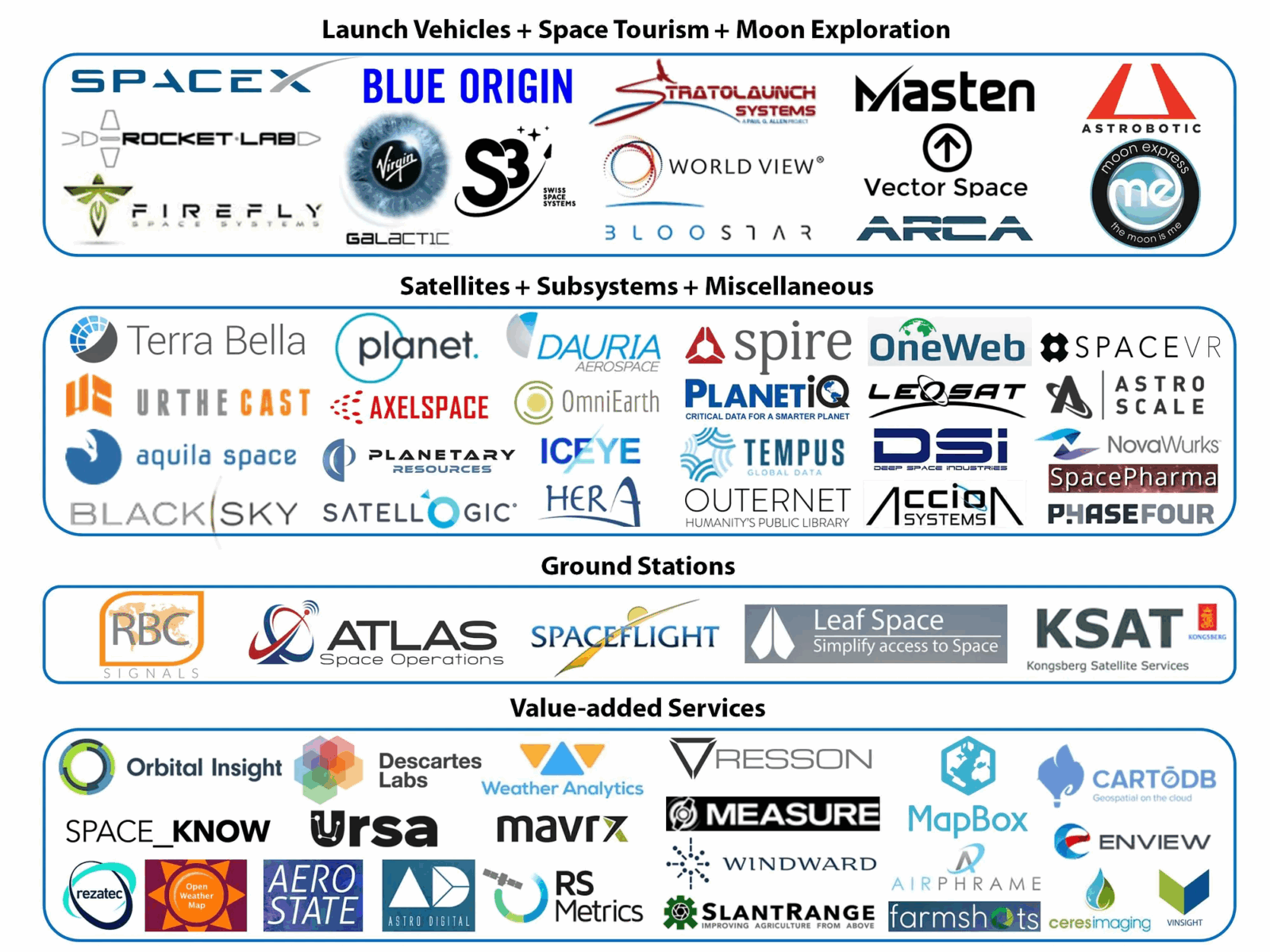
While space tourism is attention grabbing, and indeed triggered our own interest in this area, it is only a small part of much bigger shifts currently at play. By opening space exploration to commercial interests in 2015, the United States unleashed a new wave of entrepreneurs and startup companies all looking to profit.
In our view, the future proposed by space billionaires is a very radical one, in the sense of radicalized and dangerous. We identify at least two vectors of harm in this future: the ecocidal and colonial. In addition, we observe how narratives about outer-space are often deployed to appeal to the imagination but are in fact folded back to reinforce power structures and wealth accumulation on Earth. These lines of inquiry result in the following matrix:
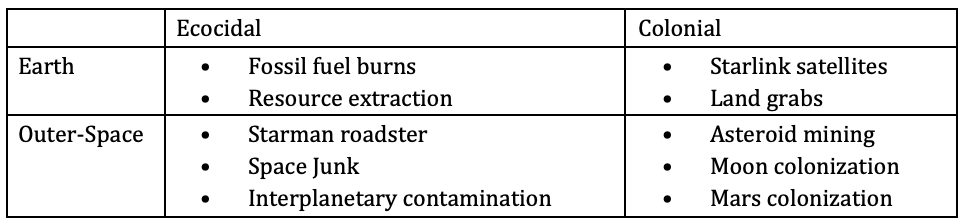
Looking to outer-space first reveals familiar patterns and operations of colonization. Alina Utrata describes processes of dispossession that “largely replicate terrestrial histories of colonization.”5 As the Catholic Church provided a frame of legality and purpose to European settlers, current colonization narratives are imbued with a form of tech-messianism. And as we feel the urgency to protect ourselves and the planet from this deadly future, pushing back on a spiritual level is an increasingly central terrain.
: :
A Sigil Séance
We turn to occultism and the figure of the witch to exorcise the modern West of positivism, liberalism, and mechanization.6 Perhaps turning to magic or the occult is also one of the last few options to reclaim a sense of agency as so little else seems available to counter the current direction of travel.
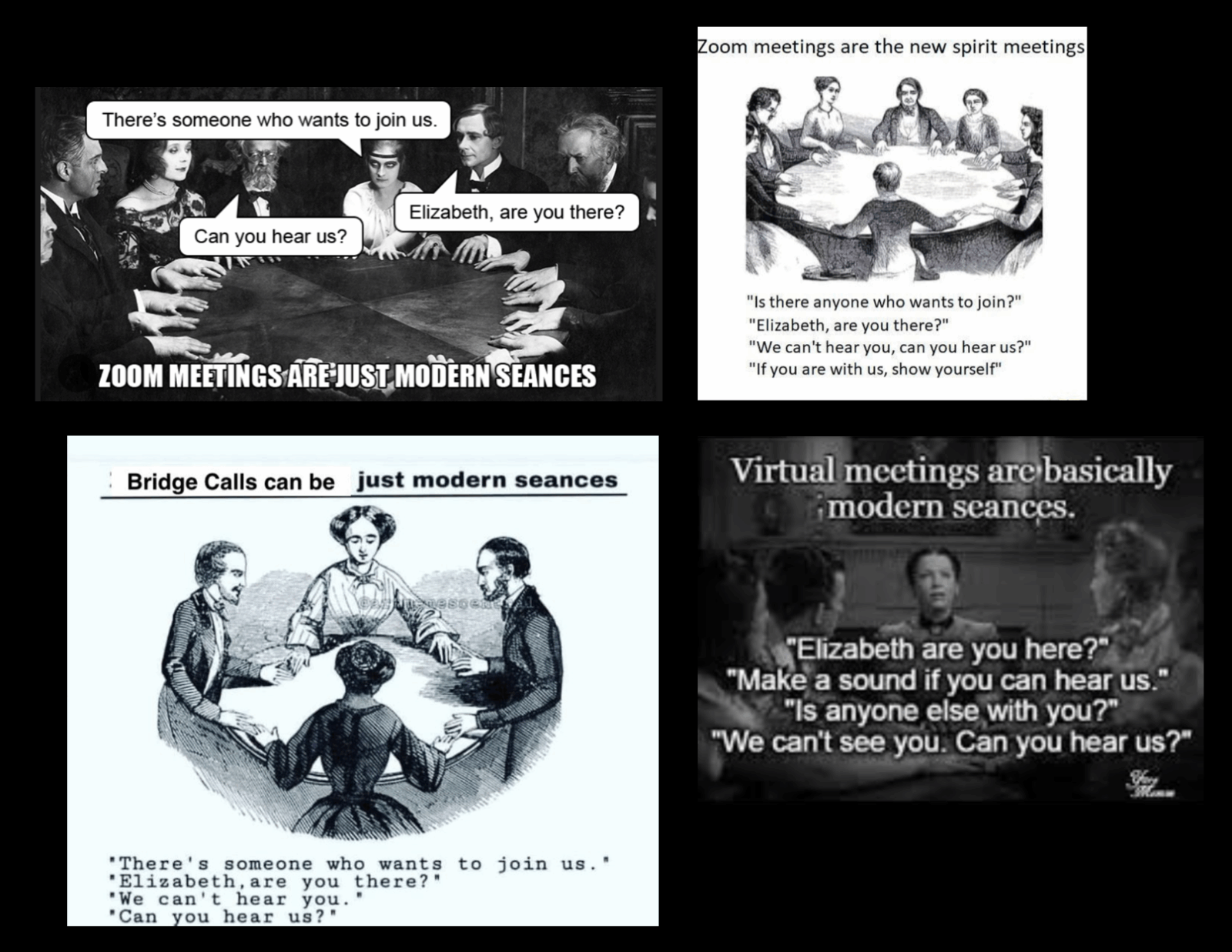
Using contemporary digital technologies to make magic can seem paradoxical. It exacerbates the tension between two worlds: the supernatural and the computational. This tension or paradox is based on normative presuppositions. On the one hand, digital technologies are associated with an objective, efficient conception of the world; on the other, magic refers to a marvelous, unapproachable, passéist or even nostalgic imagination. However this separation is open to question.
From the spiritual telegraph to algorithmic oracles, every new technology has been suspected of embodying supernatural powers. Art that explored this subject includes worldbrain.d-w.fr (2015), with the Universal Fluid, and mediamediums.net (2013-2016), about ghosts in communication tools. In search of our own operational mode of practice, we turned our attention to an old technique: symbolic inscription, which is said to have a magical effect on the world. More precisely, we turned to its contemporary re-appropriation in Chaos Magick. Chaos Magick is a modern tradition of magic characterized by the use of paradigm shifting, free cosmogony and belief as a tool to achieve effects. Famous figures include turn of the 20th century occultist and philosopher Alister Crowley and one of his key sources of inspiration, artist Austin Osman Spare. The latter revived sigils as “the art of believing” in a 1913 publication7, a way to mobilize one’s unconscious power towards the manifestation of a plan.
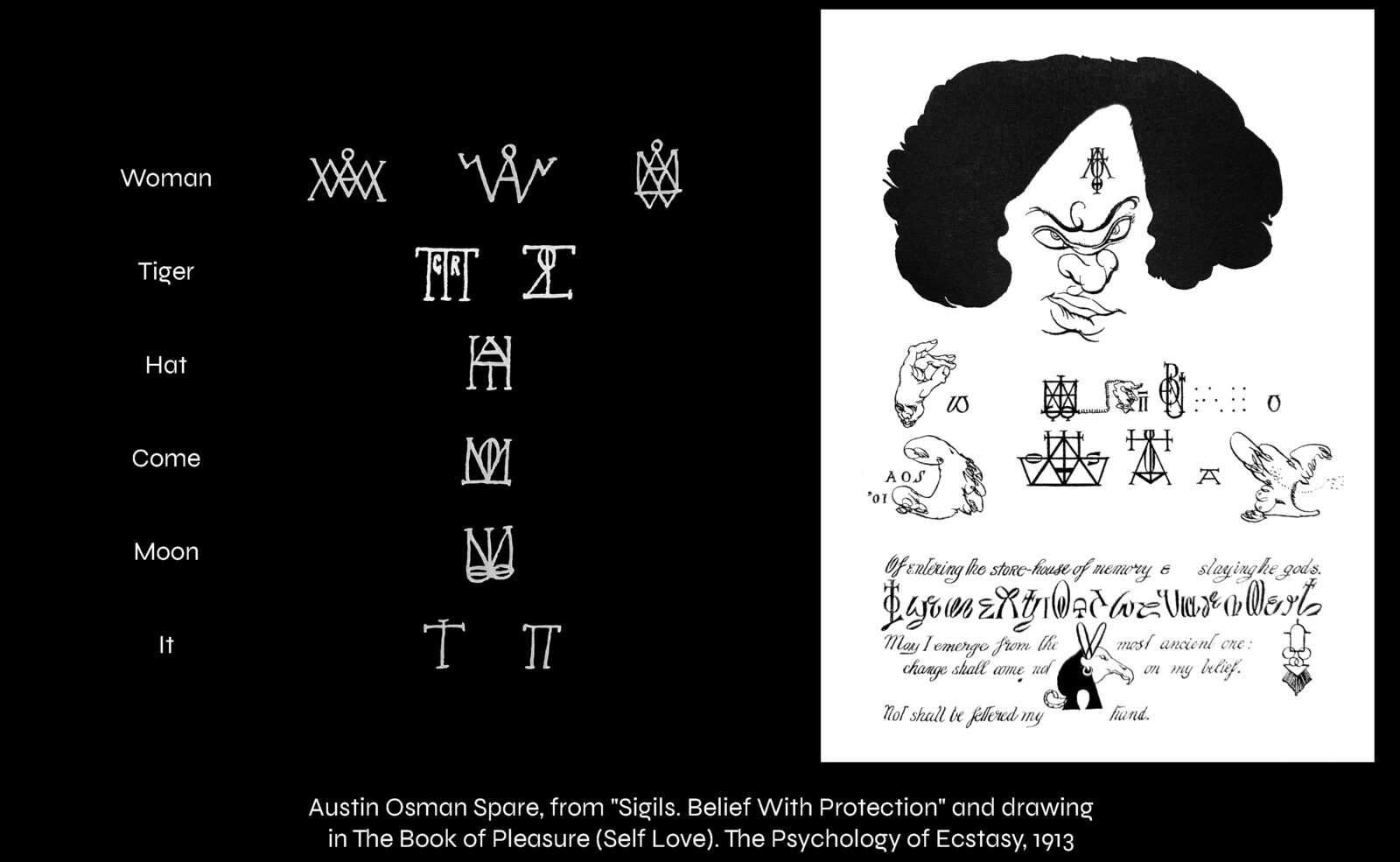
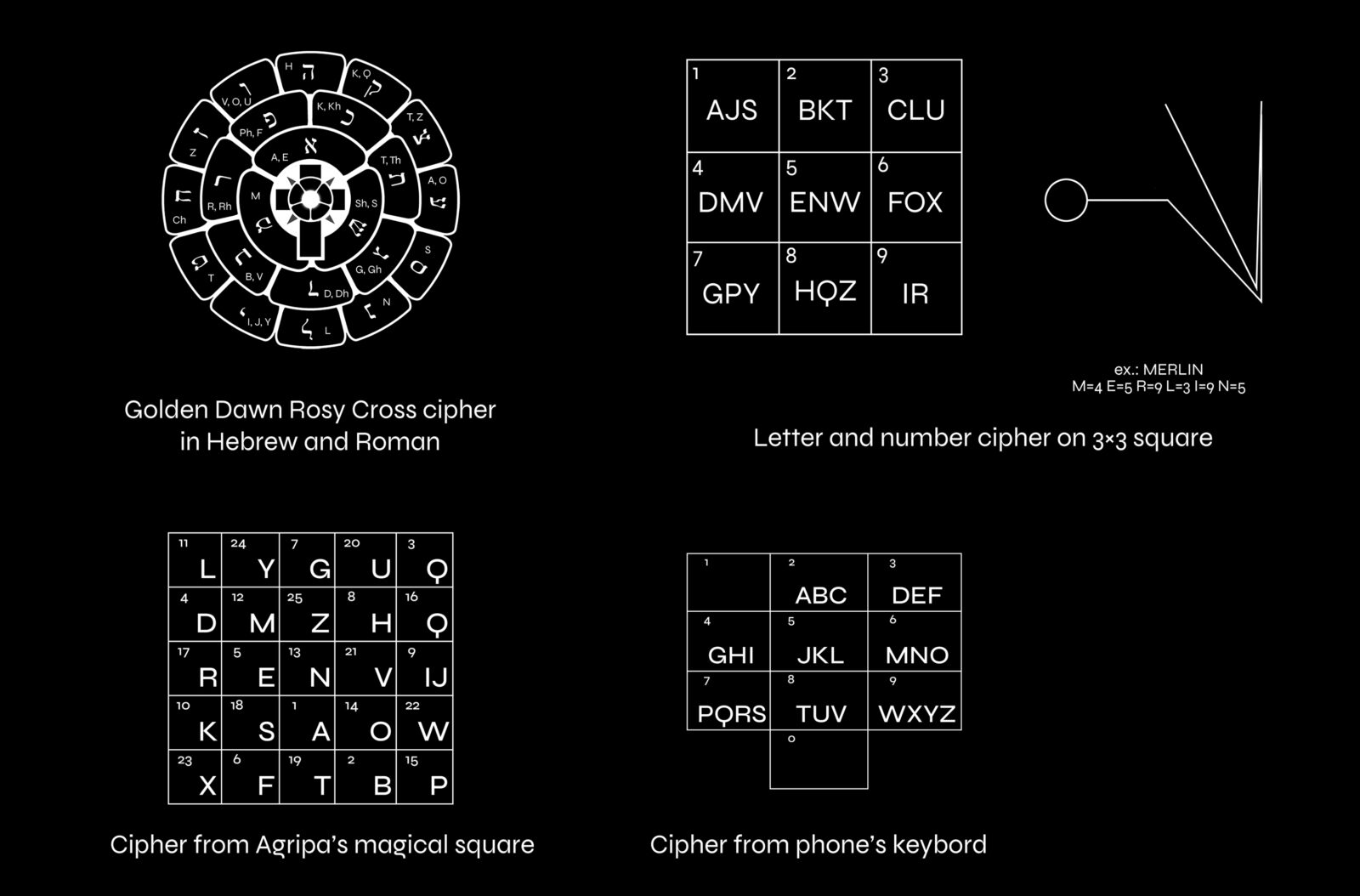
Ciphers are a much older magical tradition. According to Mark B. Jackson, they organize letters spatially to allow for the encryption of sentences or words.8 We chose to work with a 3-by-3 square cipher grid, somewhere between a magical square and the phone keypad cipher dear to elderly millennials like ourselves.

We started experimenting with sigils back in 2021 with the first generator to encode the phrase: “Bind billionaires who fly to the upper sky from coming back to Earth.”
With the Sigil Séance, we are adding a collaborative element to this sigil making, allowing for a group of people to gather on a web page to generate and launch sigils together.10). Anyone can edit or replace the phrase in the main text box and click a button to draw the sigil and sync it to all other participants.
: :
Sigil Launch Procedure
Ritual participants are all connected through an audio call. One participant types a phrase to launch and invites edits or additions from the others. The software converts each phrase to a sigil by (1) condensing all letters and removing duplicates such that each letter cannot appear again after its first position, and (2) tracing the resulting sequence of letters on the cypher grid. All participants must express consent before proceeding to the sigil launch. Consent is reset each time the sigil is changed to ensure that the collective energy cannot be subverted at the last minute.
Participants send and receive letters according to their position on the grid. This process repeats until the whole letter sequence is completed, at which point the sigil is considered launched and one participant clears the grid by sending an empty update.
This launch procedure is repeated a number of times during the séance ritual, which we designed as a teleperformance.11 The traditional ouija board or séance arrangement is replaced by a web page within which we collectively charge and launch the sigil of a spell.
Ritual script for a teleperformance (~1 hour)
1) Hosts and participants introduce each other
2) Participants are invited to add entities to the formation (e.g. Karl Marx, Laika, Vladimir Komarov). Each entity is summoned by launching their name
3) Hosts declare the formation complete
4) Payload: participants are invited to share anti-space-billionaire phrases for collective launching
5) Summoned entities are released by launching their reversed name
6) Hosts declare the formation open
7) Discussion and de-briefing
Magick & Teleperformance as Counter-attack Formations
In the field of political activism, collective action is a strategy adopted to resist control mechanisms based on individualization. Our work is also an opportunity to revisit past examples of groups and movements mobilizing magic as a means of political action. For instance, in 1970s Japan, a group of monks called Jusatsu Kito Sodan were part of the vanguard of the country’s environmental movement. Their name translates to “Killing Curse Prayer Monk Group,” and they were documented by photographer Mitsutoshi Hanaga as they traveled to sites of industrial pollution to curse the factory owners responsible by repeating mantras and other ritual practices.


The Jusatsu Kito Sodan monks deployed abhicara, or black magic, which would be frowned upon by many Buddhists who adhere to strict non-violence. But given the amount of deadly damage unleashed by industrial pollution, the Jusatsu Kito Sodan argued a kill curse was warranted: “Leaving aside the human toll, by wiping out a fathomless number of no less important organisms, those responsible for industrial pollution threatened the entire cosmic order. A curse was therefore the only proportionate response.”David Benqué

Lucile Olympe Haute